By entering this site, you acknowledge that all products and information are provided for research purposes only and are not intended for human consumption or medical use.
You must be 21 years of age or older to use this website.
Not evaluated by the FDA · Not for human or veterinary use
Research use only · Not for human or veterinary use
COA on Every Batch
BioRegen Verified
≥99% HPLC Purity
Made in the USA
2-Day Shipping
30-Day Money Back
Compound Profile
Researcher-grade specs. No guesswork.
Each vial ships with structural data and lot identifiers for the compound, plus a Certificate of Analysis documenting purity and identity. Ready for the bench. Synthesized via solid-phase peptide synthesis (SPPS), purified by reverse-phase HPLC, verified by mass spectrometry, and tested for sterility and endotoxin load. Every spec is documented on the signed Certificate of Analysis that ships with your vial.
Thymulin is a naturally occurring nonapeptide first isolated from porcine blood serum in the early 1970s and formally characterized in 1977 by immunologists Jean-François Bach and Mireille Dardenne at the Institut Necker in Paris. Originally designated Facteur Thymique Sérique (FTS), it was renamed thymulin in 1981. The peptide derives exclusively from thymic epithelial cells and carries an N-terminal pyroglutamic acid residue. Its defining property is an absolute requirement for equimolar zinc (Zn²⁺) binding — without the zinc cofactor, the peptide is biologically inert, making thymulin the only known thymic hormone dependent on a metal ion for activity.
Research conducted primarily by Dardenne, Bach, and later by Goya and colleagues at CONICET (Argentina) has characterized thymulin across a range of preclinical models. Investigated areas include T-lymphocyte maturation and differentiation marker induction (CD2, CD3, CD4, CD8), neuroendocrine-thymic axis signaling, age-related immunosenescence and thymic involution, NK cell activity modulation, and inflammatory pain pathways. All findings referenced here derive from preclinical models and have not been validated in controlled human clinical trials.
Thymulin research appears in Annals of the New York Academy of Sciences, International Immunopharmacology, and Neuroscience. The compound is not approved by the U.S. Food and Drug Administration for any therapeutic indication. It is classified as a research compound only.
Documented Research Areas
Zinc-dependent T-lymphocyte maturation and differentiation marker induction
Thymic epithelial cell secretion and age-related thymulin decline
Neuroendocrine-thymic axis modulation and hypophysotropic signaling
Inflammatory cytokine regulation and spinal nociceptive pathway activity
NK cell activity and peripheral immune efficiency in aged-model systems
Immunosenescence and thymic involution in aging preclinical models
For research use only. Statements above describe published research literature and do not constitute health, medical, or therapeutic claims for either compound or for the blend. Not for human or veterinary use. Not evaluated by the FDA.
Compound Profile
Researcher-grade specs. No guesswork.
Each vial ships with structural data and lot identifiers for the compound, plus a Certificate of Analysis documenting purity and identity. Ready for the bench. Synthesized via solid-phase peptide synthesis (SPPS), purified by reverse-phase HPLC, verified by mass spectrometry, and tested for sterility and endotoxin load. Every spec is documented on the signed Certificate of Analysis that ships with your vial.
Thymulin is a naturally occurring nonapeptide first isolated from porcine blood serum in the early 1970s and formally characterized in 1977 by immunologists Jean-François Bach and Mireille Dardenne at the Institut Necker in Paris. Originally designated Facteur Thymique Sérique (FTS), it was renamed thymulin in 1981. The peptide derives exclusively from thymic epithelial cells and carries an N-terminal pyroglutamic acid residue. Its defining property is an absolute requirement for equimolar zinc (Zn²⁺) binding — without the zinc cofactor, the peptide is biologically inert, making thymulin the only known thymic hormone dependent on a metal ion for activity.
Research conducted primarily by Dardenne, Bach, and later by Goya and colleagues at CONICET (Argentina) has characterized thymulin across a range of preclinical models. Investigated areas include T-lymphocyte maturation and differentiation marker induction (CD2, CD3, CD4, CD8), neuroendocrine-thymic axis signaling, age-related immunosenescence and thymic involution, NK cell activity modulation, and inflammatory pain pathways. All findings referenced here derive from preclinical models and have not been validated in controlled human clinical trials.
Thymulin research appears in Annals of the New York Academy of Sciences, International Immunopharmacology, and Neuroscience. The compound is not approved by the U.S. Food and Drug Administration for any therapeutic indication. It is classified as a research compound only.
For research use only. Statements above describe published research literature and do not constitute health, medical, or therapeutic claims for either compound or for the blend. Not for human or veterinary use. Not evaluated by the FDA.
Documented Research Areas
Zinc-dependent T-lymphocyte maturation and differentiation marker induction
Thymic epithelial cell secretion and age-related thymulin decline
Neuroendocrine-thymic axis modulation and hypophysotropic signaling
Inflammatory cytokine regulation and spinal nociceptive pathway activity
NK cell activity and peripheral immune efficiency in aged-model systems
Immunosenescence and thymic involution in aging preclinical models
Selected Studies · Peer-Reviewed Literature
A curated list of published peer-reviewed papers indexed in PubMed where BPC-157 has been studied. Provided for research-context only. Linking to the literature does not constitute endorsement of any therapeutic application.
01
Reggiani PC, et al. (2009) · Annals of the New York Academy of Sciences
The thymus-neuroendocrine axis: physiology, molecular biology, and therapeutic potential of the thymic peptide thymulin
Compound database reference for chemical and structural data:
Research You Can Trust.
At Revvd Research, quality comes first. Our peptides are produced using advanced manufacturing processes and verified through comprehensive testing protocols to deliver dependable results for research applications.
Each batch ships with a third-party Certificate of Analysis from BioRegen Analytical. HPLC purity, mass-spectrometry identity, sterility, and LAL endotoxin screening. Every test, every lot.
Your lot number ships on the label and on the COA. Enter it in the verifier any time to retrieve the original lab report.
Every lot is tested by reverse-phase HPLC and certified at ≥99% purity. The Certificate of Analysis lists the exact lot purity. Your COA ships with the vial and is also retrievable by lot number through our online verifier.
Testing is done by BioRegen Analytical, an independent third-party lab. Every batch goes through HPLC purity, LC-MS identity confirmation, sterility screening, and LAL endotoxin testing. The signed Certificate of Analysis ships with each vial.
Made in the USA. Synthesized in a US cGMP-aligned facility. Tested by a US-based independent lab. Shipped from US fulfillment.
Orders ship via 2-day expedited delivery from US fulfillment. Free over $150. Vials are sealed, packaged with insulation, and shipped in tamper-evident packaging.
30-day money-back guarantee on every order. No restocking fees, no return shipping cost on defective product.
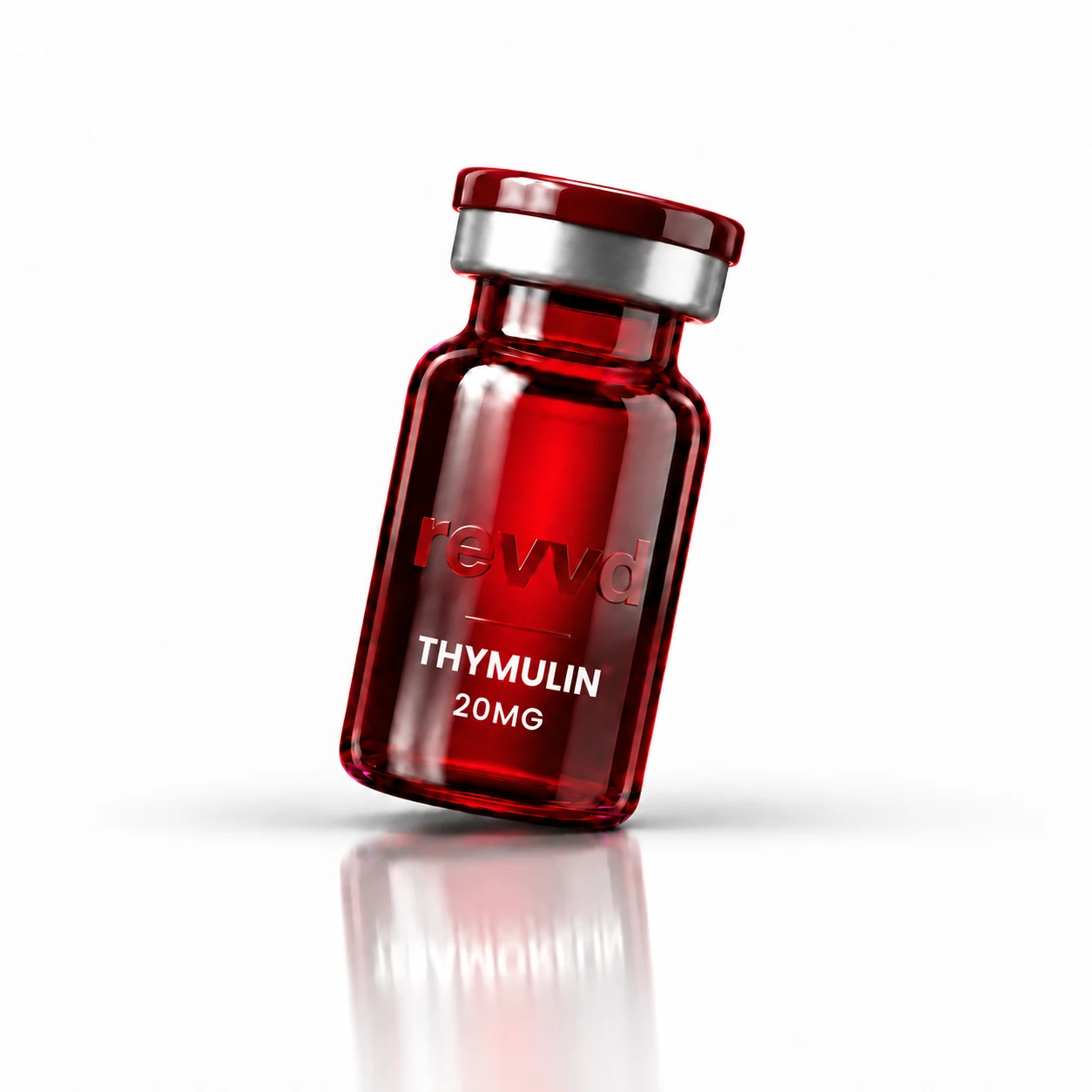
One sealed 20mg vial of Thymulin as a lyophilized powder. Lot-stamped label. Signed Certificate of Analysis. Tamper-evident packaging. Bacteriostatic water is sold separately.
Store sealed at 2–8°C, away from direct light, heat, and moisture. Sealed shelf life is 24 months from the COA date.
No. All Elixser Peptides products are sold strictly for laboratory research and in vitro study. They are not drugs, food, or cosmetics. They are not for human or veterinary use, consumption, or therapeutic application. They have not been evaluated by the FDA. By purchasing, you agree to use these materials in compliance with applicable laws and ethical research standards.
The standard for research integrity.
Featured Collection – Premium purity compounds crafted with consistency, precision, and quality in mind.